- Monday - Friday
- 9:00-20:00 h
- Saturday
- 9:00-16:00 h
- Sunday
- closed
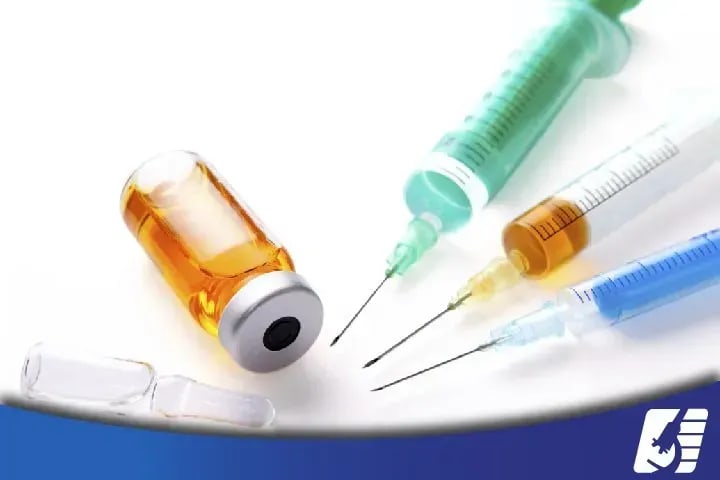
Antivenoms are biological preparations containing specific antibodies that neutralize animal venoms. They are produced by the controlled immunization of animals —usually horses— with gradually increasing doses of the corresponding venom. The result is an antibody-rich serum that, when given to the affected patient, blocks the venom's action in the body.
How does antivenom work?
Once in the bloodstream, the antivenom antibodies bind to venom molecules, forming inactive complexes the body can eliminate. This stops the progression of tissue damage, abnormal clotting and severe systemic effects. However, antivenom does not reverse damage already done — it only neutralizes circulating venom — so how quickly it is given is decisive for the clinical outcome.
Important: Antivenom must be given as soon as possible after the bite or sting. Every minute counts — go to the emergency room right away or contact a specialist.
Routes of administration
The route depends on the type of venom, the severity of symptoms and the patient's condition:
Intravenous
Used in severe cases with systemic involvement. Allows fast, even distribution of the antibodies.
Intramuscular
Used in moderate cases or when immediate venous access is not possible.
In both cases it is given under strict medical supervision, with continuous monitoring in case of an allergic reaction to the animal-derived serum.
When is it indicated?
Antivenom treatment is indicated for bites or stings from venomous animals. The most common cases include:
- ✓ Venomous snakes (pit vipers, coral snakes).
- ✓ Scorpions.
- ✓ Medically significant spiders.
- ✓ Other venomous animals, based on clinical assessment.
The decision to give antivenom depends on the species involved, the time since the incident, the part of the body affected and the symptoms present.
How we care for you
Clinical assessment
The doctor assesses the animal involved, the time elapsed and the symptoms to choose the right antivenom and dose.
Controlled administration
It is given under continuous medical supervision, monitoring vital signs and the response to treatment.
Follow-up
After the antivenom is given, the patient is observed to detect and manage possible adverse reactions and to assess the clinical response.
Specialized care in Guadalajara
The Unidad de Alergia, Asma e Inmunología Clínica has the protocol and resources to give antivenom safely. Dr. Rodolfo Salazar Villa and his team provide prompt care after incidents with venomous animals in Guadalajara and at Hospital Puerta de Hierro Sur.
